




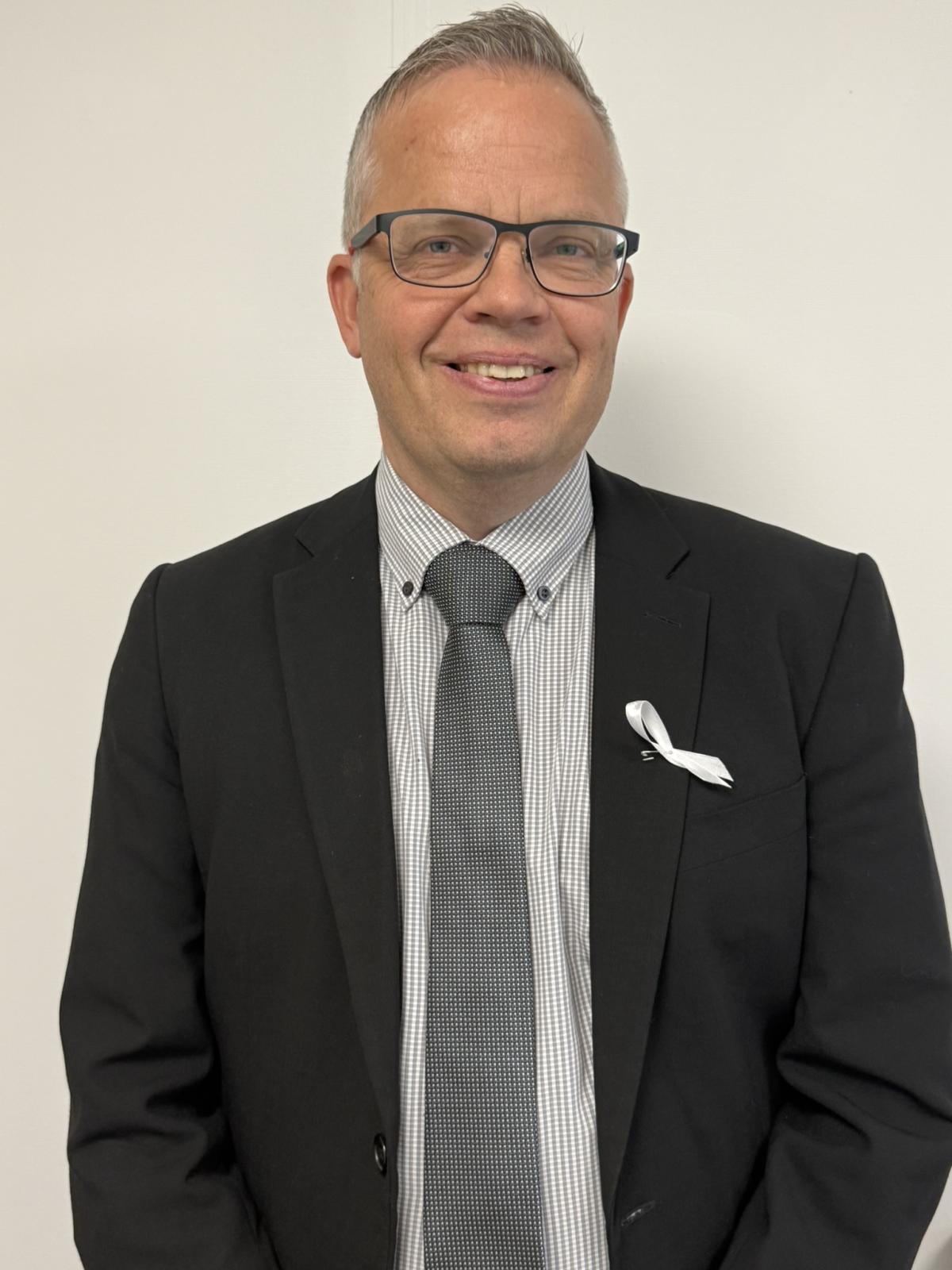

A NEW campaign aimed at tackling violence against women and girls across Dorset is launching today.
The campaign brings together Dorset Police, Police and Crime Commissioner David Sidwick, the Bournemouth Echo and Dorset Echo to raise awareness, encourage reporting and highlight the support available to those affected.
The 16-day campaign, called Here for Her Safety, coincides with the international 16 Days of Activism Against Gender-Based Violence campaign and White Ribbon Day.
Over the next two weeks, it will examine the realities of violence against women and girls (VAWG), share expert insight and survivor experiences, and promote the message that ending abuse is a whole-system approach.
Despite Dorset being recognised as one of the safest counties in the country, campaign partners say the scale and complexity of violence against women and girls means there is still significant work to do.
A hidden threat close to home
For Police and Crime Commissioner David Sidwick, one of the biggest misconceptions surrounding violence against women and girls is where the threat comes from.

He said: "If you were to ask me and push me to put a pin in what I think is the biggest threat, I would say it is someone you know.
"It is not violence on the streets. It is somebody that you know in a relationship."
Mr Sidwick said domestic abuse, coercive and controlling behaviour, stalking, harassment, rape and sexual violence continue to have a devastating impact on victims across Dorset.
He also highlighted growing concerns around online offending, including cyberstalking, harassment and intimidation through digital platforms.
He said: "Violence against women and girls remains one of the most significant challenges facing our communities.
"While Dorset is rightly regarded as one of the safest counties in the country, we must recognise that this does not mean every woman and girl feels safe, or is safe, in their everyday lives."
He added that women living in rural areas can face additional barriers to seeking help, including isolation, limited transport links and concerns around confidentiality in smaller communities.
A complex problem requiring a collective response

Dorset Police's lead for violence against women and girls, Detective Superintendent Neil Wright, described VAWG as a deeply ingrained and complex issue which cannot be solved by policing alone.
He said: "Violence against women and girls is a very engrained, complicated and significantly extensive problem.
"It is a really complex problem. We can't solve it alone."
Det Supt Wright said police and partner organisations are continually reviewing services and identifying gaps to ensure victims receive the support they need.
He stressed that wider society has a critical role to play in preventing harmful behaviour before it escalates.
He said: "It is absolutely essential that society has mechanisms to ensure that those who are growing up through schools understand the problem, understand where the line is and understand that they should be calling it out as well."
That view is shared by Mr Sidwick, who believes meaningful progress will only come through wider cultural change.
He added: "It's not down to women to stop violence against women and girls.
"We've got to change society, change culture, change the understanding, and we've all got to work at it together as partners."
Prevention and early intervention
A key focus for both Dorset Police and the Office of the Police and Crime Commissioner is preventing offending before victims are harmed.
Mr Sidwick said early intervention with perpetrators is essential.
He said: "If we are serious about preventing violence against women and girls, we need to tackle the root cause rather than simply responding after someone has become a victim.
"We need to be much better at recognising the warning signs of abusive, controlling, threatening and predatory behaviour and intervening before that behaviour escalates."
That includes challenging misogynistic attitudes, educating young people about healthy relationships, consent and respect, and identifying concerning behaviour at an early stage.
Mr Sidwick said his office funds services aimed not only at supporting victims but also addressing harmful behaviours before they develop into more serious offending.
He said partnership working between police, schools, charities, health services, local authorities and community organisations is vital in achieving this aim.
Encouraging victims to come forward
Both campaign leaders stressed the importance of reporting incidents and seeking support, whether through police or specialist organisations.
Det Supt Wright said Dorset Police has changed significantly in recent years, with increased training and awareness around domestic abuse, rape and serious sexual offences, alongside the introduction of trauma-informed approaches to victim care.
He explained that reports are assessed by trained staff before being allocated, with officers working closely with victims to establish safe ways to communicate and provide support.
He said: "The pace of change to protect victims is extraordinary.
"There's still lots more work to do, but the distance we've travelled is exceptional.
"We want to encourage reporting, because there may be people sitting in their homes at night fearing for their safety.
"What we want them to do is report to the police or get that third-sector support."
Mr Sidwick said improving confidence to come forward is one of the campaign's primary goals.
Success, he said, would mean raising awareness of what constitutes violence against women and girls, increasing reporting, ensuring women know where support is available and helping victims feel listened to, believed and treated with dignity.
The picture in Dorset
Latest Office for National Statistics figures place Dorset among the counties with the lowest rates of both sexual offences and stalking nationally.
Dorset ranks sixth lowest nationally for sexual offences, with 2,255 recorded incidents, and eighth lowest for stalking, with 5,383 offences.
Mr Sidwick said reports of stalking in Dorset have fallen by almost 500 compared with the same period last year, while reported sexual offences have increased by around 100.
However, he said the focus should remain on understanding offending patterns, identifying repeat perpetrators and ensuring victims receive appropriate protection and support.
A message to anyone suffering abuse
As the Here for Her Safety campaign begins, Mr Sidwick's message to anyone experiencing abuse, violence or stalking is simple.
He said: "You are not alone, you are not to blame, and you do not have to suffer in silence.
"If someone's behaviour is making you feel frightened, threatened, controlled or unsafe, it matters, and you deserve support.
"There is help available, there are people who will listen, and you do not have to face this alone."
Anyone in immediate danger should call 999.
Non-emergency incidents can be reported to Dorset Police on 101 or online. Support is also available through organisations including Paragon, STARS Dorset and The YOU Trust.
How to report rape, sexual assault or other sexual offences | Dorset Police


Share