


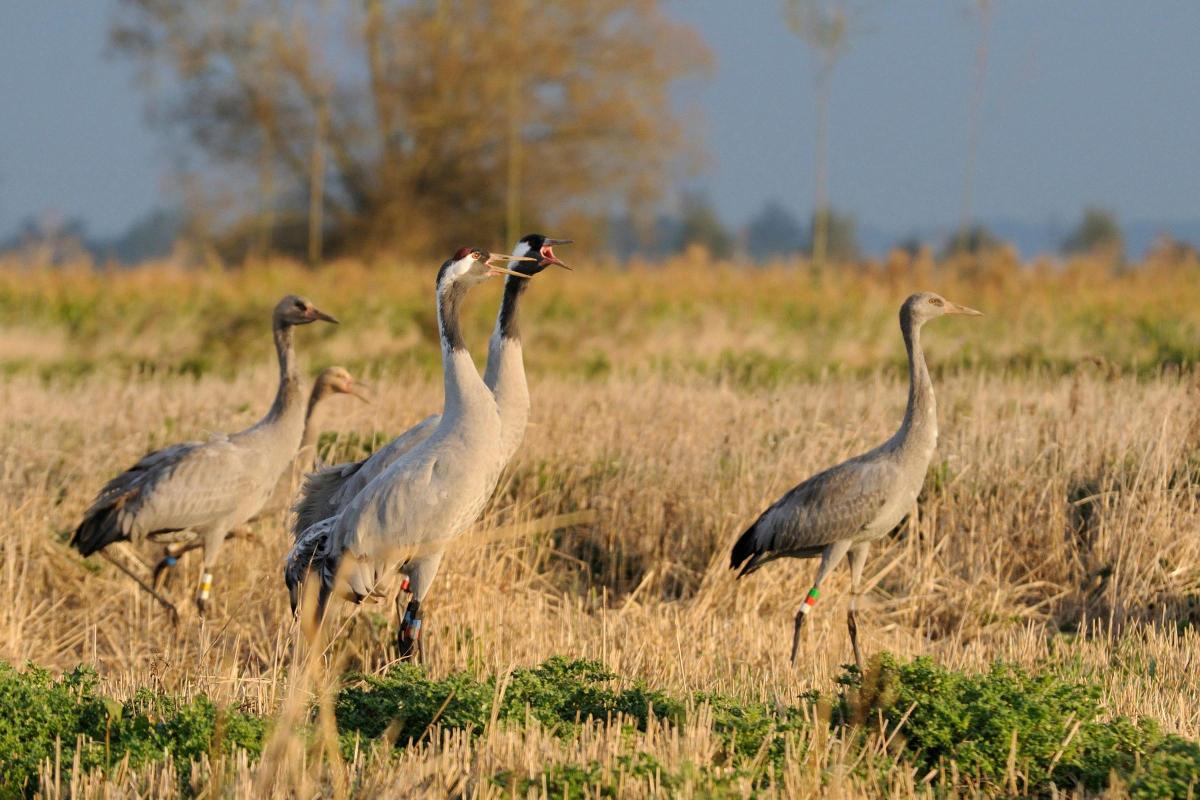


Scientists at Bournemouth University have solved a mystery which has been puzzling researchers for 150 years using ancient DNA.
A new study led by Dr John Stewart, Professor of Evolutionary Palaeoecology at BU and leader of the research team, has revealed that a large, ice age-era bird once thought to be an extinct species of giant crane, is actually just a larger form of the common crane still found in Europe today.
According to the report, the bird, named Grus primigenia, was first identified in the 19th century by French biologist Alphonse Milne-Edwards, who based his findings on bone fragments discovered in southern France.
READ MORE:
Bournemouth mother urges AI cancer research after radio story led to diagnosis
Flying Scotsman in Dorset today - when and where to see it
Independent bagel shop set to host grand opening this weekend

The bones were dated to the end of the last ice age, and for more than a century were believed to represent a separate, extinct species.
Dr Stewart said: "We suspected that these large cranes were not extinct and instead represented larger, modern European common cranes.
"We believe that the reason for the mistaken identity was that cranes have large males and smaller females and we think this contributed to previous speculation that there were two different species – the living, common crane we see today and the extinct, larger species."
The study, conducted with the Centre for Palaeogenetics in Stokholm, Sweden, analysed ancient DNA from 18 crane bones found across Europe, including in England, Wales, France, Germany, and the Balearic Islands.
Genetic testing revealed all the bones belonged to the modern common crane, not an extinct species.
Dr Stewart added: "Previous studies had merely used the size and shape of the bones to attempt to understand these large birds.
"The use of DNA analysis has given us a more accurate picture of what they represent."
Going forward, the research team have confirmed it now plans to investigate why these cranes were once larger than their modern descendants.
Dr Stewart said: "The challenge going forwards is to investigate the reason for the cranes decrease in size.
"Wetland drainage and human land use changes are what we suspect, but more work is needed to resolve that."
Dr Stewart also noted this case raises questions about how other extinct bird species have been identified.
He added: "While it is true that many species of birds are vulnerable to human actions today, it may be that we have overestimated the number of extinctions in the past."


Share