


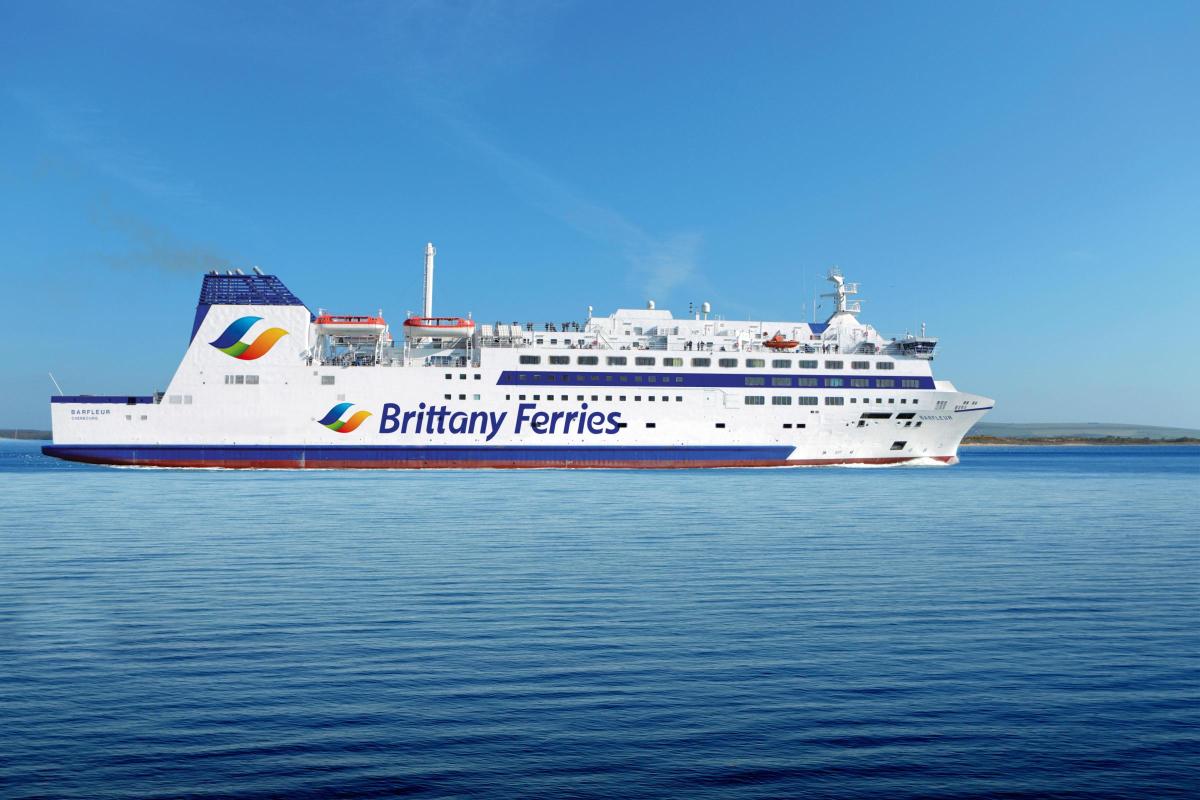
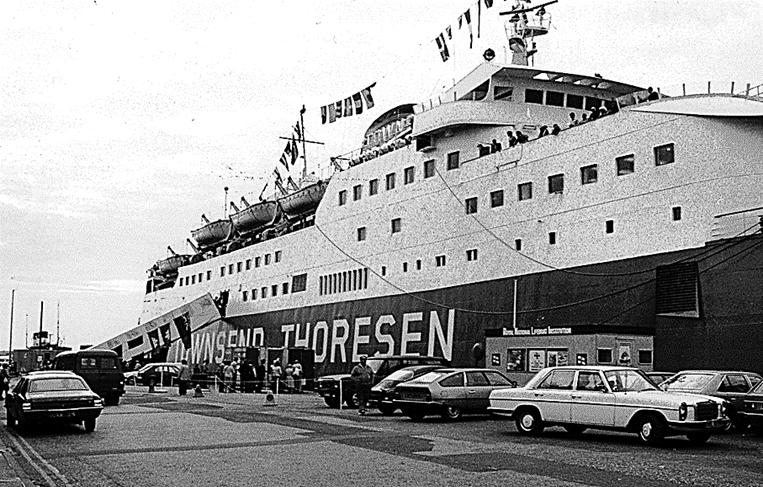

Brittany Ferries will permanently axe its historic Poole-to-Cherbourg route this autumn, ending a service that has linked Dorset with France for decades.
For nearly four decades, Brittany Ferries ships passing Brownsea Island have been a familiar sight in Poole Harbour.
The service carried holidaymakers, freight and friends across the Channel to Normandy every day.
Now the ships’ engines are set to fall silent.
The Poole-Cherbourg link was being planned decades before the MS Barfleur entered service.
In October 1962, Poole Harbour Commissioners considered proposals for a regular car and passenger ferry service between Poole and Cherbourg.
Brittany Ferries has linked Dorset with France since 1985, becoming part of life on both sides of the Channel.
The MS Barfleur became a much-loved fixture in Poole Harbour after joining the route in 1992.
By the 1990s, the route was so successful that Cherbourg invested £6 million in a new ferry terminal designed like a TGV high-speed train.

The four-hour-and-15-minute crossing was marketed as the shortest route across the Channel.
The crossing offered more than transport, with award-winning restaurants, French patisseries, cinemas and duty-free shopping.
At its mid-1990s peak, promotional campaigns offered return tickets for foot passengers at just £5.
The French-flagged Barfleur, registered in Cherbourg, has faced repeated challenges over the years.
In 2005, an Office of Fair Trading decision forced the service to halve its peak summer sailings.
The route closed temporarily in February 2010 after falling ticket sales led to the Barfleur’s withdrawal, but she returned to Poole in 2013.
During that sombre, albeit temporary, farewell, a small crowd gathered on the Sandbanks shore, flashing their cameras and sounding their car horns in a chorus of goodbyes as the vessel idled out of the harbour.
That short-lived exit now looks like a warning of the permanent loss facing Poole’s maritime community.
The route will close at the end of October 2026 and the Barfleur will be sold, ending its service to generations of local travellers.

Brittany Ferries blamed a mix of financial pressures for axing the service.
Brittany Ferries chief executive Christophe Mathieu blamed outstanding Covid-19 loan repayments, weaker demand and fierce competition on the eastern Channel.
The rising cost of the European Union’s Emissions Trading System has added to the pressure.
The operator says the cuts are needed to secure its future and keep fares affordable, but harbour workers face the fallout.
At the Port of Poole, the job losses are already being counted.
Up to 20 jobs are expected to go, including more than a dozen compulsory redundancies among stevedores.
A port worker said staff were devastated and that French dockers and the ferry crew were equally unhappy.
The closure threatens more than a commercial link: it also damages ties between the communities.
Next year marks 50 years since Poole and Cherbourg officially became twin towns under a 1977 charter promoting friendship and understanding.
Councillor Marcus Andrews, chairman of the Poole Cherbourg Twinning Association, said the loss of the direct route would frustrate twinning groups across Dorset forced to travel via Portsmouth.
But there may be hope for the route yet.
Captain Brian Murphy, chief executive of Poole Harbour Commissioners, sees Brittany Ferries’ departure as a chance for another operator to take over the route.
Passengers will use a daily Portsmouth service for now, but local leaders hope a new operator will restore the Poole-Cherbourg link.
The wider restructuring also includes the planned sale of Cotentin and the expected closure of the Portsmouth to Le Havre route from October 2026.


Share